Design can be loud—demanding attention, posing for photos, and turning every corner into a statement. But the most memorable luxury experiences often do the opposite. They use design as a quiet advantage: shaping light so you sleep deeper, arranging space so you move without friction, and choosing textures that make your body exhale before your mind catches up. In destinations where design serves the guest, beauty isn’t a performance. It’s a form of care—measured, intentional, and deeply human.
1) The Arrival That Lowers Your Pulse
A truly guest-first property begins working on you before you’ve even checked in. The drive slows slightly as landscaping narrows your view, guiding attention away from the road and toward calm. Doors open softly, not theatrically; the lobby doesn’t feel like a museum, but like a living room curated for travelers who value ease. Seating is placed where you naturally want to pause. The scent is restrained, the lighting warm and low, and the first refreshment appears as if it has always been waiting—cool, bright, and simple. This is design as nervous-system hospitality: no sharp edges, no stress points, no need to “figure out” where to go.
2) Rooms Built Around Your Habits
In guest-centered design, the suite doesn’t ask you to adapt. It adapts to you. The bed isn’t merely centered; it’s positioned for silence, away from hallway resonance and elevator hum. Power outlets sit exactly where your hand reaches, and the bedside controls are legible at midnight without turning on a harsh light. Closets are thoughtfully lit, with enough space to hang garments without creasing, and drawers glide with the kind of softness that makes even unpacking feel elegant. The bathroom is not a separate showpiece—it’s a ritual zone. A mirror that flatters without distortion. A shower with pressure tuned for comfort. A bath that feels carved for lingering. Design here becomes an invisible assistant, anticipating daily habits and smoothing them into something special.
3) Light, Shade, and the Art of Quiet
The most luxurious feature can be silence, and silence often begins with light. Curtains close fully, without gaps that invite sunrise to interrupt you. During the day, natural light is filtered rather than blasted—through screens, sheer layers, and architectural overhangs that create gentle gradients. Reading corners are placed where daylight is stable, not fleeting. Even corridors feel calm because they’re not overly bright; they guide you with softness, not glare. The result is a rhythm that supports your stay: morning energy, afternoon ease, evening intimacy. When design respects light this way, it quietly respects your sleep, your mood, and your pace.
4) Materials That Feel Like Assurance
Guest-serving design is tactile. You feel it in handrails that fit the palm, in linens that don’t fight your skin, in floors that are cool where they should be and warm where you stand barefoot. Stone, wood, woven fibers—materials selected not to impress, but to comfort. Even sound is treated like a material: rugs that absorb footsteps, doors that close without a slam, walls that protect privacy. The best properties don’t simply look expensive; they feel dependable. Every surface communicates a single message: you’re safe here, and you’re allowed to slow down.
5) Shared Spaces That Respect Personal Space
Luxury social areas can be tricky—too open and you feel exposed, too closed and you feel boxed in. When design serves the guest, lounges and restaurants balance privacy with connection. Seating is angled to allow conversation without broadcasting it. Pathways flow without forcing eye contact. The bar has energy, but also small corners for quiet. Outdoor terraces offer both sun and shade, with wind protection where it matters. Even pool layouts can feel intentional: enough distance between loungers, thoughtful towel stations, discreet service routes that keep staff present but never intrusive. It’s hospitality choreography—space designed to honor your boundaries while still making you feel cared for.
Q&A: More Hotels Where Design Feels Personal
Q1: Which hotels are best for minimalist, calming design?
Look for properties known for restraint and natural materials—design-led boutique hotels, certain Japanese-inspired wellness resorts, and modern coastal retreats where architecture prioritizes light and airflow.
Q2: Where can I find design that blends local craft with modern luxury?
Consider destinations with strong artisan traditions: Mediterranean islands, Morocco, Mexico, Bali, and parts of Italy and Portugal often offer hotels that integrate handwoven textiles, carved stone, and local ceramics into contemporary spaces.
Q3: What hotels feel best for long stays or “live-in” comfort?
All-suite properties and residence-style luxury hotels tend to excel here—especially those with kitchenettes, generous storage, flexible seating, and workspaces designed to reduce fatigue.
Q4: Are there design-forward hotels that still feel warm, not cold?
Yes. The key is hospitality-driven design: softer palettes, layered textures, warmer lighting, and layouts that prioritize how guests move and rest—not just how rooms photograph.
Conclusion
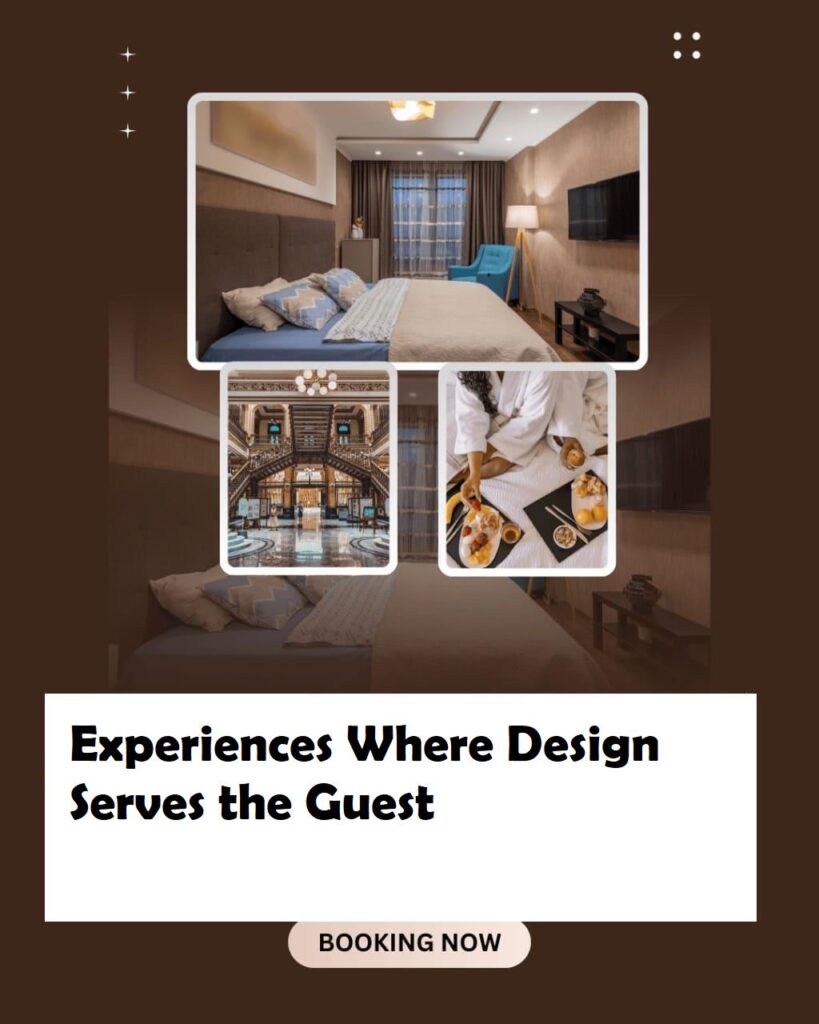
“Experiences Where Design Serves the Guest” is a promise of quiet excellence. It’s the kind of luxury that doesn’t ask for applause because it’s too busy delivering comfort—through light that protects sleep, materials that soothe the senses, and layouts that remove friction from your day. These are places where aesthetics and care become inseparable, where every detail exists for one purpose: to make your stay feel effortlessly supported. When design is this thoughtful, the exclusivity isn’t just in how it looks—it’s in how deeply it understands you.