Rest becomes rare when every space competes for your attention—screens glowing, corridors echoing, schedules tugging at your sleeve. The most memorable luxury, in contrast, feels almost invisible: a calm architecture of silence, softness, and intentional absence. “Spaces That Invite Rest Without Distraction” is about places that don’t ask you to perform relaxation—they make it inevitable, through design that lowers your pulse and service that never interrupts the spell. Below are six distinct themes that capture how truly restorative hospitality is built.
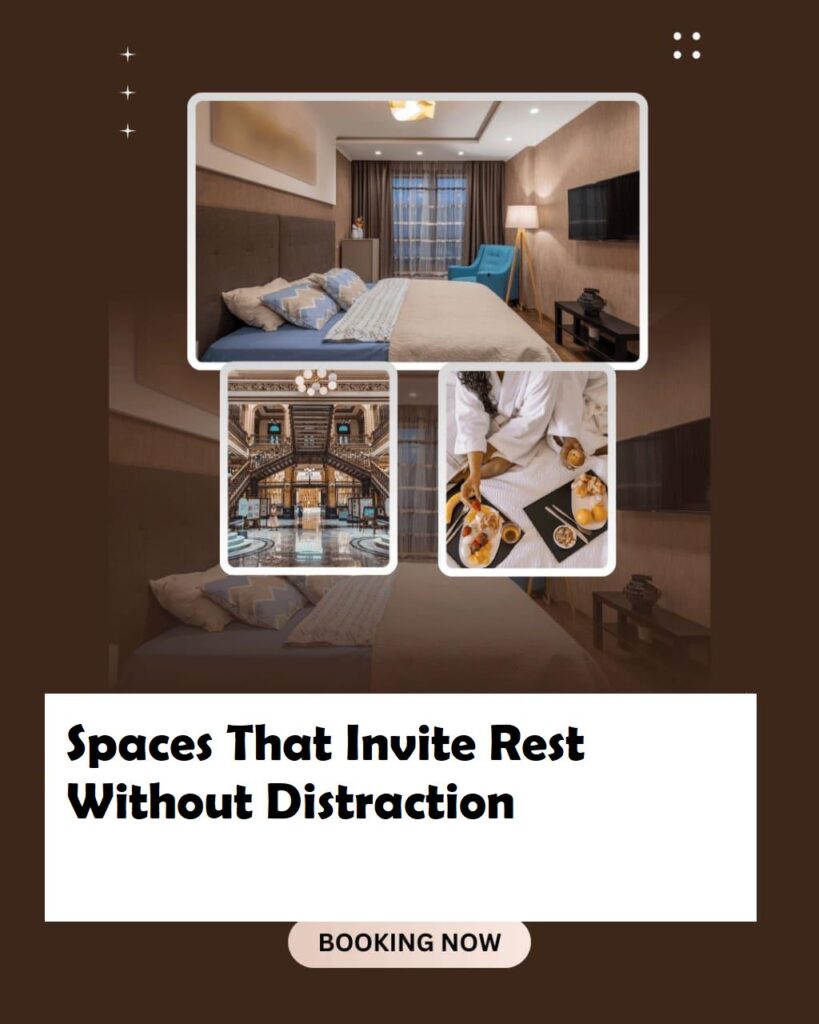
1) The Threshold Suite: Where Arrival Becomes a Soft Landing
The best restful spaces begin before you unpack. A quiet entryway—muted textures, low lighting, and a sense of depth—signals that the outside world has ended. The room doesn’t greet you with spectacle; it greets you with permission. Luggage disappears without commotion. The air feels cooler, cleaner, slower. Even the first few steps—carpeted, hushed, forgiving—create a private rhythm that immediately belongs to you.
2) The Shadow-Soft Room: Light That Knows When to Leave
Distraction often hides in brightness: harsh bulbs, reflective surfaces, daylight that refuses to soften. In a shadow-soft room, light is layered—warm, low, and adjustable in a way that feels intuitive rather than technical. Curtains close with quiet finality. Reading lamps don’t glare; they glow. At night, the room becomes a sanctuary of gentle dimness, encouraging you to stop scanning and start settling. Sleep arrives not as a task, but as a natural consequence.
3) The Linen Studio: Texture as a Form of Calm
True comfort is tactile. Restful spaces treat fabric like therapy: linens that breathe, towels that feel substantial, robes that drape instead of cling. The bed isn’t just “plush”—it’s deliberately composed, with layers that invite stillness rather than overheating. Even the furniture participates: rounded edges, softened corners, no visual noise. It’s the quiet confidence of materials chosen for how they feel, not how they photograph.
4) The Courtyard Nook: Nature Without Performance
Some hotels bring nature in as decoration. Rest-focused spaces bring it in as presence. A small terrace with a single chair, a private courtyard with shadowing trees, a view that doesn’t demand admiration—just attention without effort. You hear a fountain rather than traffic. Leaves move slowly in the distance. The outdoors becomes a pause button, not another itinerary. And because it’s private, you can actually exhale without becoming visible.
5) The Silent Pantry: Comfort Within Arm’s Reach
Distraction can come from friction—having to call, ask, wait, explain. The silent pantry removes that. Water is already chilled. Tea and simple nourishing snacks are available without a sales pitch. Glassware feels intentional, not incidental. Everything is placed so you don’t have to search. This is luxury that respects your quiet mood: it keeps you cared for while protecting the fragile, beautiful focus of doing nothing.
6) The Unseen Concierge: Service That Doesn’t Break the Spell
The highest form of hospitality is attentiveness without interruption. Rest-centered spaces train service to feel like a gentle current: present, precise, and discreet. Housekeeping works around your rhythm. Requests are handled quickly, without repeated confirmations. Small needs are anticipated—extra pillows, a softer scent profile, a room adjustment—without turning your rest into a conversation. You feel held, not managed.
Q&A: Choosing Your Ideal Distraction-Free Stay
Q1: I want quiet, but I still love the city. Where should I look?
Choose properties known for serenity inside the bustle—places with strong soundproofing, calm interior design, and a wellness-first mindset. Consider brands and hotels often associated with refined quiet, such as Aman city hotels, Park Hyatt locations, or select Four Seasons properties that prioritize privacy and space.
Q2: Which type of hotel is best for a true digital reset?
Look for wellness resorts and design-led retreats where the environment encourages lower stimulation: nature-forward settings, spacious rooms, and programming that doesn’t feel like a schedule. Brands like Six Senses, COMO Shambhala-focused retreats, and certain Alila resorts are frequently chosen by travelers seeking calmer rhythms.
Q3: I’m traveling solo—how do I make rest feel luxurious, not lonely?
Pick a property with thoughtful “solo-friendly” spaces: inviting lounges, quiet gardens, warm lighting, and dining that feels comfortable for one. A great spa and a room designed for lingering (daybed, balcony, reading nook) transforms solitude into a private, premium ritual.
Q4: Can families enjoy this style of calm, or is it only for couples?
Families can absolutely experience distraction-free rest—just aim for suite-style accommodations, villas, or resorts with generous outdoor space. The key is layout: separate zones for sleeping and relaxing, plus nature nearby. That way, quiet isn’t fragile—it’s built into the structure of the stay.
Conclusion: The Most Exclusive Luxury Is the Absence of Noise
“Spaces That Invite Rest Without Distraction” celebrates a rarer kind of prestige: the ability to truly disengage. These themes—soft arrivals, intelligent light, calming textures, private nature, frictionless comfort, and discreet service—create an experience that feels both intimate and elevated. The exclusivity isn’t about gold accents or grand lobbies. It’s the privilege of uninterrupted calm, where time stops performing and starts belonging to you.