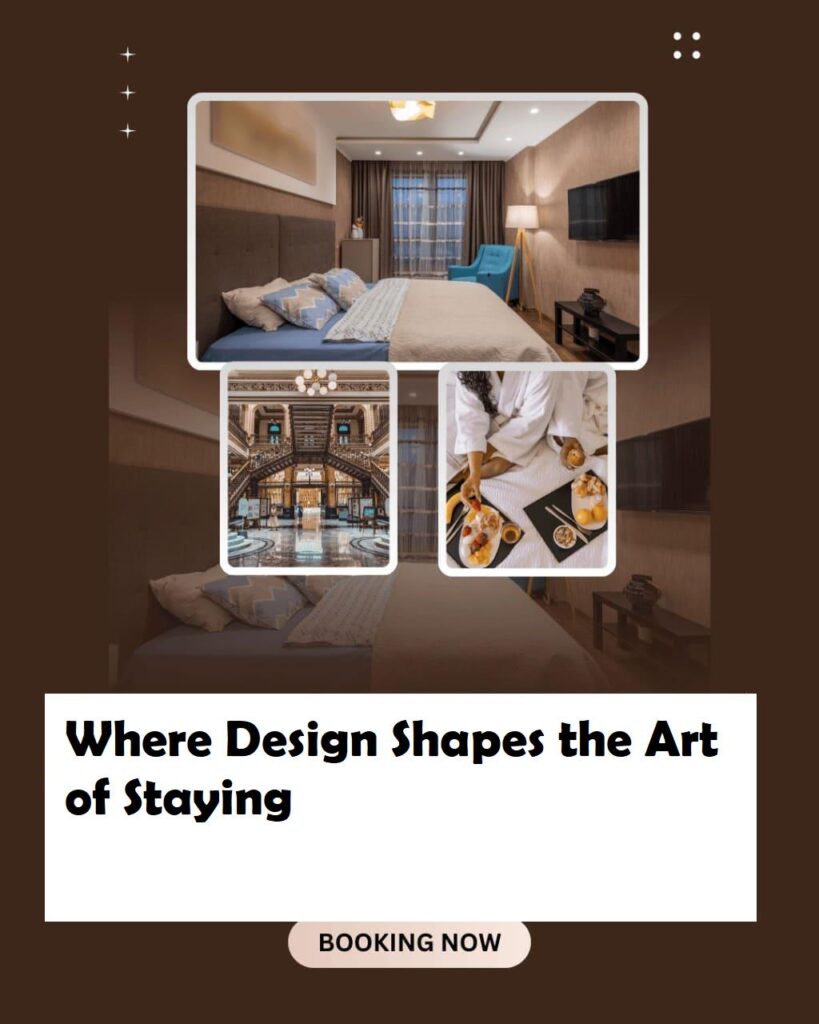
There are hotels that simply look beautiful—and then there are places where design quietly choreographs the entire experience of being there. In these stays, architecture isn’t a backdrop. It becomes a guide: drawing you toward light, slowing your pace with texture and proportion, and shaping moments of privacy, social energy, and calm. “Where Design Shapes the Art of Staying” is about properties that treat every corridor, scent, material, and view as part of a lived composition—so your stay feels curated without ever feeling controlled. Below are distinctive themes that capture how design can elevate hospitality into something closer to art.
1) The Arrival That Resets Your Mind
The best-designed hotels understand that the first minute matters. The entry sequence—driveway, doorway, threshold, lobby—acts like a gentle reset button. You step from noise into calm, from hurried to intentional. Materials do the talking: cool stone underfoot, warm timber overhead, soft acoustic surfaces that hush the world. Lighting is never harsh; it’s measured, flattering, almost cinematic. Staff movements mirror the architecture—unrushed, precise, confident. Even the scent feels designed, as if the air itself has been tailored. By the time you reach your room, you haven’t just checked in. You’ve transitioned.
2) Rooms Designed Like Private Galleries
Some hotels treat a guest room as a generic box with a bed. Design-led stays treat it as a personal gallery you inhabit. The palette is restrained, not bland—so that details carry weight: a sculptural chair, a hand-finished headboard, a curtain fabric that changes character with daylight. Storage disappears into clean lines. Tech is present but invisible, allowing the room to feel timeless. The bed placement is considered for sightlines, so you wake to a framed view, not clutter. Even silence is engineered through insulation and layout, letting you feel genuinely alone in the best way.
3) Architecture That Guides How You Move
In truly thoughtful properties, you don’t need signs. The building itself suggests where to go. Corridors widen near social spaces and narrow for privacy. Natural light pulls you forward. Courtyards reveal themselves gradually, like scenes in a film. Staircases become invitations rather than utilities. You find yourself wandering—curious, not lost. This is design as hospitality: making the property readable, intuitive, and emotionally engaging. It’s the difference between a hotel that contains amenities and a hotel that leads you to experiences.
4) Water, Light, and Reflection as Daily Ritual
Design-centric hotels often treat water and light as core ingredients—because they instantly change how a place feels. A narrow reflecting pool calms an entrance. A rooftop pool turns sunset into an event. Bathrooms use indirect lighting and reflective surfaces to make mornings softer and evenings slower. Even a simple glass of water by the bed feels intentional when it sits on a stone tray, next to a lamp that glows like a lantern. These details don’t shout luxury; they create a rhythm of comfort that becomes addictive.
5) Dining Spaces That Feel Like Set Pieces
When design shapes the art of staying, restaurants aren’t just places to eat—they’re environments that elevate appetite. Seating is spaced for privacy. Tables align with views. Sound is controlled so conversation feels intimate. The bar is lit like a jewel box, pulling you in with quiet magnetism. Kitchens may be partially visible, adding theatre without chaos. Even breakfast feels composed: ceramics that feel handmade, linens that fall perfectly, sunlight arranged across the room like a designer planned it. Food tastes better when the room respects it.
6) Landscape as an Extension of the Interior
The most memorable hotels blur the boundary between inside and outside. Gardens are not decorative—they’re spatial partners. Paths feel like slow invitations. Plants soften angles and cool the air. Outdoor lounges are designed with the same care as the lobby, so you never feel like you’ve “stepped out” of the experience. In these places, nature is curated without becoming artificial, and the hotel feels rooted to its setting rather than dropped onto it.
Q&A: More Hotels Where Design Leads the Experience
Q: I want design that feels iconic, not trendy—what style should I look for?
Look for hotels with strong architectural lineage: modernist clarity, heritage restoration, or properties designed by notable architects or studios. These tend to age beautifully because they rely on proportion and material, not fashionable décor.
Q: Which types of hotels best deliver “design as an experience”?
Design-led boutique hotels, architect-driven resorts, and flagship properties by brands known for aesthetics often excel—especially those that emphasize craftsmanship, local materials, and site-specific planning.
Q: Any recommended hotels to explore (globally) for design-focused stays?
Consider Aman Tokyo for serene minimalism, The Silo Hotel (Cape Town) for bold industrial transformation, Marina Bay Sands (Singapore) for statement architecture, Rosewood Hong Kong for contemporary refinement, Six Senses Uluwatu (Bali) for elevated tropical modernism, and The Ritz-Carlton Kyoto for restrained elegance with cultural depth.
Conclusion
“Where Design Shapes the Art of Staying” is ultimately about hotels that make you feel something—calm, wonder, clarity, restoration—through space itself. These properties don’t rely on excess; they rely on intention. From the first threshold to the last glance back, every detail supports a more private, more beautiful way of traveling. The exclusivity here isn’t only about price or prestige—it’s about access to environments designed with such precision that your time inside them feels elevated, composed, and quietly unforgettable.